Sculpture recreates odd optical effects of famed Lycurgus Cup
Source: Arstechnica ·
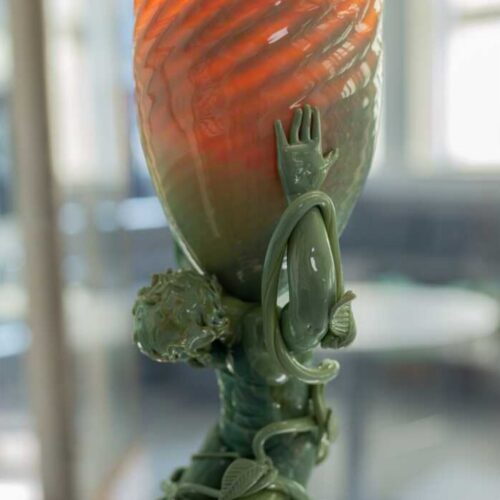
University of Sheffield researchers figured out how to recreate the 1600-year-old glass recipe.
From the source
Dating back to around 400 CE and made of dichroic glass, the Lycurgus Cup is notable for exhibiting different colors depending on the light. (It gets its name from the scene depicted on its surface, of King Lycurgus of Thrace.) Light it from the front, and the cup looks green; light it from behind, and the color changes to a deep red. University of Sheffield scientists have recreated the original recipe to produce a contemporary glass sculpture with the same optical effect. The cup is considered one of the seven glass wonders of the world, one of just 40 glass cage cups that survived. Exactly why the unusual color effects of the Lycurgus Cup occurred was a mystery until 2007, when a team of scientists discovered the color shifts were due to the presence of nanoparticles in the glass—the result of Roman artisans adding finely ground gold and silver into the mix. Those nanoparticles change how the electrons in the cup vibrate in response to light so that the color one sees shifts with…
BestAIBroker analysis
- Finance-aware sentiment: neutral (+0.00 on a -1 to +1 scale).
- Event classification: OTHER.
- Market importance score: 29/100, weighting entity relevance, source credibility, multi-outlet coverage and recency.
- Symbols referenced: CE.